
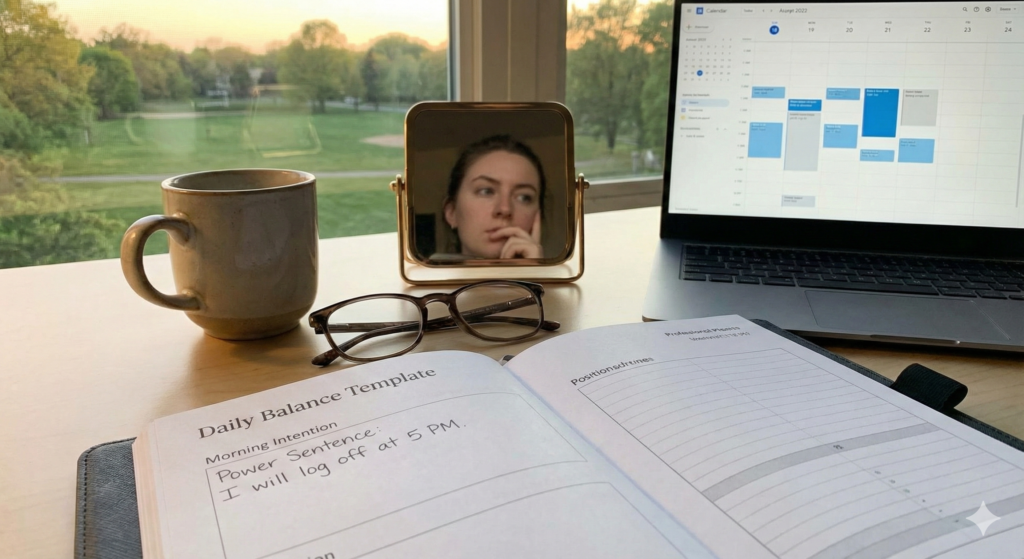
Achieving a sustainable work-life balance is rarely about managing a calendar; it is about managing your mindset. Many of us spend decades grinding under the impression that “balance” is a destination we reach once we work hard enough. In reality, balance is a collection of boundaries and internal shifts that most people learn far too late in their careers.
Drawing from timeless wisdom, here is a comprehensive guide on how to apply 11 essential life lessons to reclaim your time, energy, and peace of mind.
The 11 Principles of Balance
1. Speak Less, Mean More
In a professional setting, over-explaining your boundaries often invites people to negotiate them. When you constantly justify why you can’t work late, you open the door for debate.
- Real Application: Practice the “Power of the Pause.” Instead of a long paragraph about your family commitments, try: “I am unavailable for calls after 6 PM.”
- Real Example: A firm, brief boundary carries more weight and commands more respect than a desperate excuse that sounds like you’re asking for permission to have a life.
2. Stop Taking Everything Personally
Most “emergency” emails and short-tempered remarks from colleagues are a reflection of their internal stress, not your performance.
- Real Application: Emotional detachment is a skill. When a project lead snaps at you, remind yourself that you are seeing their stress, not your failure.
- Real Example: If a manager sends a blunt, critical feedback note at 8 PM, realize it is likely their own lack of time management. Internalizing this as a personal failure ruins your evening; viewing it as their struggle allows you to address it objectively the next morning.
3. Focus on Possibilities, Not Problems
A “problem” mindset traps you in a cycle of venting, which drains the energy you need for your personal life. A “possibility” mindset looks for the exit strategy.
- Real Application: If you are overwhelmed by a manual task that eats up two hours of your evening every week, stop complaining. Look for the “possibility”—can this be automated, or can the process be simplified?
- Real Example: Instead of saying “I have too much paperwork,” ask “What tool can I use to cut this paperwork time in half so I can get home early?”
4. Lean Into the Struggle
Difficult periods in your career—like a high-pressure launch or a difficult boss—are often the very things that force you to develop the boundaries you’ve been lacking.
- Real Application: View your current work-life friction as “resistance training.” It is showing you exactly where your boundaries are weak.
- Real Example: Many people only learn to say “no” after a period of burnout. Use that past struggle as the foundation for your current resilience. Your history of overworking is exactly what taught you the value of a quiet weekend.
5. Recognize the Reason for the People You Meet
Not every colleague is meant to be a lifelong friend, but every person teaches you something about how you want (or don’t want) to live.
- Real Application: Be a student of other people’s lifestyles.
- Real Example: Use a “workaholic” mentor to learn technical skills, but also as a warning of the life you don’t want to lead. Conversely, find that one colleague who always leaves on time and observe how they manage their productivity.
6. Never Be Afraid to Try Something New
Burnout often stems from a life that has become 100% professional output. Trying something new outside of work prevents your identity from being tied solely to your job title.
- Real Application: Engage in a “low-stakes” hobby.
- Real Example: Sign up for a beginner’s kickboxing class or a painting workshop. Learning a new skill where you are allowed to be “bad” at it reduces the perfectionist pressure you feel at the office.
7. Value the Moment Before It’s a Memory
Work will always be there, but your child’s first play or your parents’ milestone birthday will not. We often realize the value of these moments only after they have passed.
- Real Application: Implement a “phone-free” hour during dinner.
- Real Example: By physically removing the distraction of work notifications during family time, you ensure that your presence at home is actual presence, not just physical proximity.
8. Practice Gratitude to Overcome Lack
It is easy to focus on the promotion you didn’t get or the raise that wasn’t enough. This scarcity mindset makes work feel like a treadmill you can never get off.
- Real Application: Before starting your workday, list three things your job provides—perhaps it’s the ability to travel, stability, or a specific coworker you enjoy.
- Real Example: Shifting your focus to what you have reduces the desperate, anxious need to overwork in hopes of finding “enough.”
9. Control Your Words, Control Your Future
The way you speak about your work becomes your reality. Constantly telling people “I’m drowning” or “I’m so stressed” reinforces that state of mind.
- Real Application: Re-frame your language from “victim” to “architect.”
- Real Example: Instead of saying “I have to stay late,” try “I am choosing to finish this now so I can be fully present tomorrow.” Changing the narrative from victim-hood to choice gives you back your power.
10. Life Is a Mirror
If you approach your work life with the belief that it is an endless battle, you will find conflict everywhere. If you view it as a tool for a better life, your experience will reflect that.
- Real Application: Check your “internal weather” before you walk through the door.
- Real Example: If you walk into the office expecting people to overstep your boundaries, you will likely project a defensive energy that creates tension. If you walk in with a calm, firm sense of your own schedule, others will naturally align with that energy.
11. Face Yourself Every Morning
At the end of the day, you aren’t answering to your CEO or your clients; you are answering to yourself.
- Real Application: Ask yourself: “If I lived every day the way I lived today, would I be happy with the life I built?“
- Real Example: If the answer is no, use that realization not as guilt, but as the fuel to log off five minutes earlier tomorrow. Be unbeatable in your commitment to your own well-being.
The Daily Balance Template
To turn these 11 points into a habit, use this quick reflection guide at the start and end of your workday.
Morning: The Intention
- The Mirror (Point 10): What energy am I choosing to project today?
- The Boundaried Word (Points 1 & 9): What is my “Power Sentence” for today? (e.g., “I will log off at 5 PM.”)
- The Non-Work Moment (Points 6 & 7): What is one thing I will do today that has nothing to do with my job?
Evening: The Review
- The External Weight (Point 2): Did I take anything personally today that actually belonged to someone else? (Visualize dropping it).
- The Gratitude Inventory (Point 8): List 3 things your job or life provided today that you are grateful for.
- The Mirror Test (Point 11): Can I look at myself in the mirror and say I lived today according to my own values?
Conclusion
Mastering work-life balance isn’t about achieving a perfect 50/50 split. It’s about intentionality. It is the realization that while your work provides the means to live, your personal life provides the reason to live.
By applying these lessons, you transition from being a passive participant in your own schedule to becoming the active architect of your energy. The world will take as much as you are willing to give. It is up to you to decide what to keep for yourself.
Watch Video: https://www.youtube.com/shorts/G3pXmgjUuGk
#WorkLifeBalance #MentalHealth #CareerGrowth #Mindfulness #ProfessionalDevelopment #Boundaries #SuccessMindset #Leadership #SelfCare #Productivity #PersonalGrowth