International logistics used to be about moving physical boxes from Point A to Point B. Today, it’s equally about moving information. The modern supply chain is a massive, pulsing digital ecosystem generating unprecedented amounts of data every single second.
From IoT sensors on refrigerated containers in the mid-Atlantic to customs declarations filed in Shanghai and last-mile delivery routes optimized in Berlin, the sheer amount of information is overwhelming traditional systems.
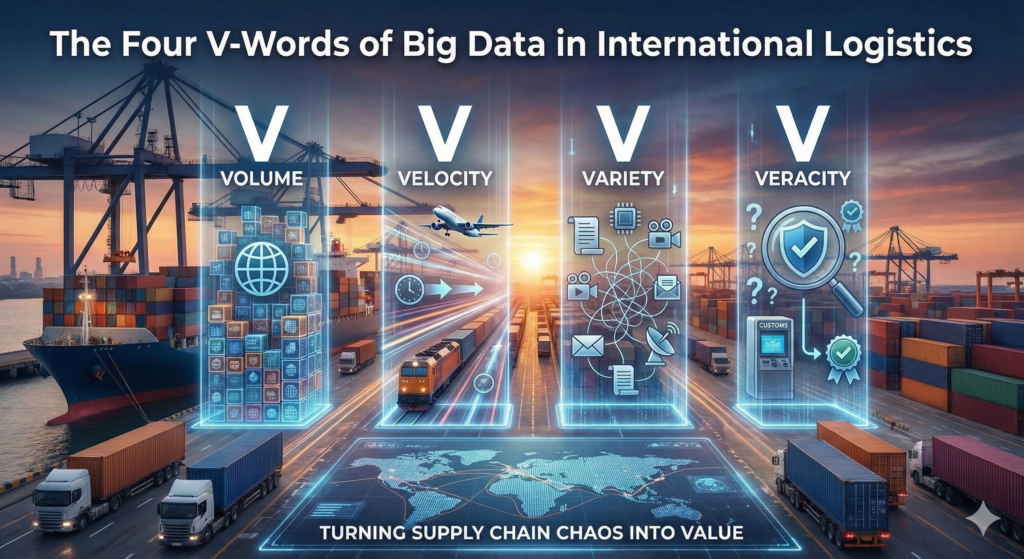
To thrive in this new era of digital trade, logistics leaders must understand the nature of the “beast” they are dealing with. This framework is known in data science as the “Four V-Words of Big Data.” Understanding Volume, Velocity, Variety, and Veracity is no longer just an IT requirement; it is a prerequisite for supply chain resilience and competitive advantage.
Here is how the 4 Vs define the current state of international logistics.
1. Volume: The Scale of the Supply Chain
Volume refers to the sheer magnitude of data being generated. In global trade, we are way past gigabytes; we are dealing with terabytes and petabytes of operational data.
- The Logistics Context: Think about the data footprint of a single end-to-end international shipment. It involves booking data, thousands of GPS pings from the vessel, status updates from port terminals, customs filings involving hundreds of SKUs, and telematics from trucks on both ends. Multiply that by the millions of containers moving globally every year.
- The Challenge: Traditional on-premise servers cannot store this. Logistics companies are migrating to cloud data lakes just to hold the sheer volume of historical and current shipment information needed for predictive analytics.
2. Velocity: The Need for Speed
Velocity is the speed at which new data is created and, crucially, the pace at which it must be processed to be useful. In logistics, data ages poorly. Information about a delay is useless three days later.
- The Logistics Context: If a vessel is delayed at the Panama Canal, or a port strike hits Felixstowe, that data point needs to be ingested instantly. Velocity is the difference between knowing a shipment is late after it arrives versus knowing it will be late while it’s still at sea—allowing you to proactively re-route or manage client expectations.
- The Challenge: Systems must move from daily “batch processing” to real-time data streaming to enable instant visibility and dynamic routing.
3. Variety: The Diversity of Documents and Signals
This is perhaps the biggest headache in international trade. Data doesn’t always come in neat rows and columns (structured data). It comes in messy, varied formats.
- The Logistics Context:
- Structured Data: EDI messages, spreadsheets of HS codes, and standardized container numbers.
- Unstructured Data: The reality of shipping. Scanned PDF bills of lading, endless email chains negotiating rates, photos of damaged cargo taken at a dock, and foggy CCTV footage from a warehouse.
- The Challenge: Building platforms that can digest a standardized EDI stream alongside a messy email attachment and synthesize them into a single “source of truth” for a shipment.
4. Veracity: Trusting the Data
Veracity refers to the quality, accuracy, and reliability of the data. Because supply chain data comes from so many fragmented partners (carriers, forwarders, customs brokers, suppliers), it is often “noisy” or untrustworthy.
- The Logistics Context: Is the verified gross mass (VGM) declared by the shipper actually accurate? Did the temperature sensor on the reefer malfunction, or did the cargo genuinely spoil? Is the estimated time of arrival (ETA) provided by the carrier based on real-time weather, or just a standard timetable?
- The Challenge: Making multi-million dollar inventory decisions based on bad data is disastrous. Logistics providers must implement rigorous data governance and cleaning processes to ensure they aren’t automating errors.
Summary: Moving to the “Fifth V”
Mastering Volume, Velocity, Variety, and Veracity is difficult, but it is the foundation of a modern logistics operation.
However, these four Vs are just the inputs. Leading supply chain organizations are focused on the Fifth V: Value.
Value is the ability to turn that massive, fast-moving, messy, and sometimes dubious data into tangible business outcomes. It’s turning “Volume” into better capacity planning. It’s using “Velocity” to reduce demurrage and detention fees. It’s leveraging “Veracity” to breeze through customs compliance.
In international logistics today, the companies that win won’t just be the ones with the biggest ships or the most warehouses; it will be the ones that best manage the Four Vs to unlock the Fifth.
#Logistics #SupplyChain #BigData #DigitalTransformation #InternationalTrade #Shipping #DataScience #SupplyChainTech #FreightForwarding